
How to Read Options Flow Before Earnings
A small difference in expiration can determine whether an option covers an earnings release. Check that first, then compare pricing and recent trades.
Before earnings, options can help you see how much movement the market is pricing and where traders are placing exposure. First confirm the date and whether the report is due before the open or after the close. Identify the first option expiration that actually includes the event.
For example, if earnings are confirmed for Thursday after the close and the chain has Thursday and Friday expirations, compare the contracts' last trading times. A Thursday contract whose trading ends before the release misses the event. A Friday contract that remains active through it includes the event.
Compare implied volatility across expirations
Look at near-the-money contracts in expirations that bracket the report. An expiration that includes earnings often has higher annualized IV than a nearby one that ends before the announcement. Use similar moneyness and the same observation time. Farther expirations can have lower annualized IV and higher dollar premium because they cover more days.
A quick dollar estimate is the midpoint of the at-the-money call plus the midpoint of the matching put for the first expiration after earnings. On a hypothetical $100 stock with a $3.20 call and a $2.80 put, the straddle costs about $6 per share, or 6% of spot. That premium covers the time until expiration and can reflect other events. Cboe and Fidelity earnings volatility guide.
Compare the price of upside and downside exposure
For a simple skew check, choose calls and puts with similar absolute delta in the same expiration. If the puts carry higher IV, comparable downside exposure is more expensive. That can reflect hedging demand or different supply across strikes. Skew alone leaves direction open.
Inspect the contracts that capture earnings
Check whether a large print is in an expiration exposed to the release. Then review the strike, bid and ask at execution, liquidity, and any nearby offsetting legs. A large ask-side call print can suggest buying on that leg. It could also be part of a roll, spread, or hedge. The unusual options flow guide walks through those checks.
What changes after the announcement
When earnings uncertainty is resolved, implied volatility can fall quickly. A long call can lose value even when the stock rises if the move is too small to offset volatility and time decay. The IV crush guide works through that outcome with sample prices.
A pre-earnings checklist
- Confirm the reporting date and time with the issuer.
- Identify the first expiration that includes the report and record stock price and option midpoints together.
- Compare near-the-money IV and skew across nearby expirations.
- Inspect the options flow preview for prints in the relevant window. Record what the execution supports and what remains unknown.
Related research
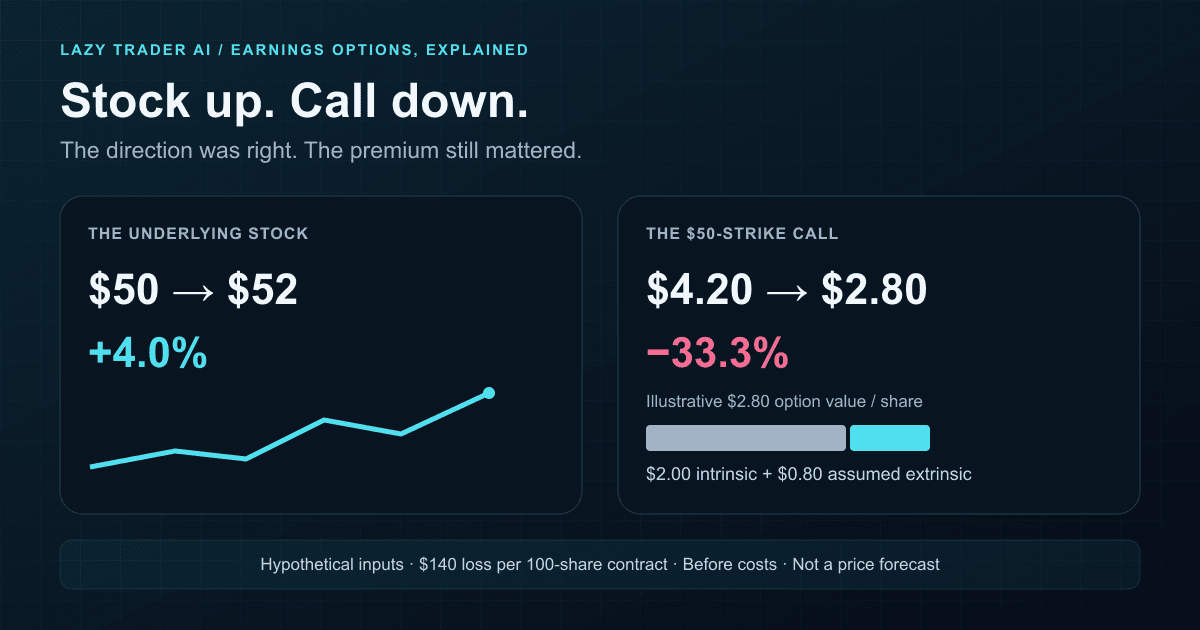
IV Crush Explained: Why Your Call Can Lose After Earnings
The stock went up. Your call went down. Understand IV crush with a worked earnings example, an interactive scenario and a contract-level research checklist.
Lazy Trader AI Research · Nov 9, 2026 · 8 min read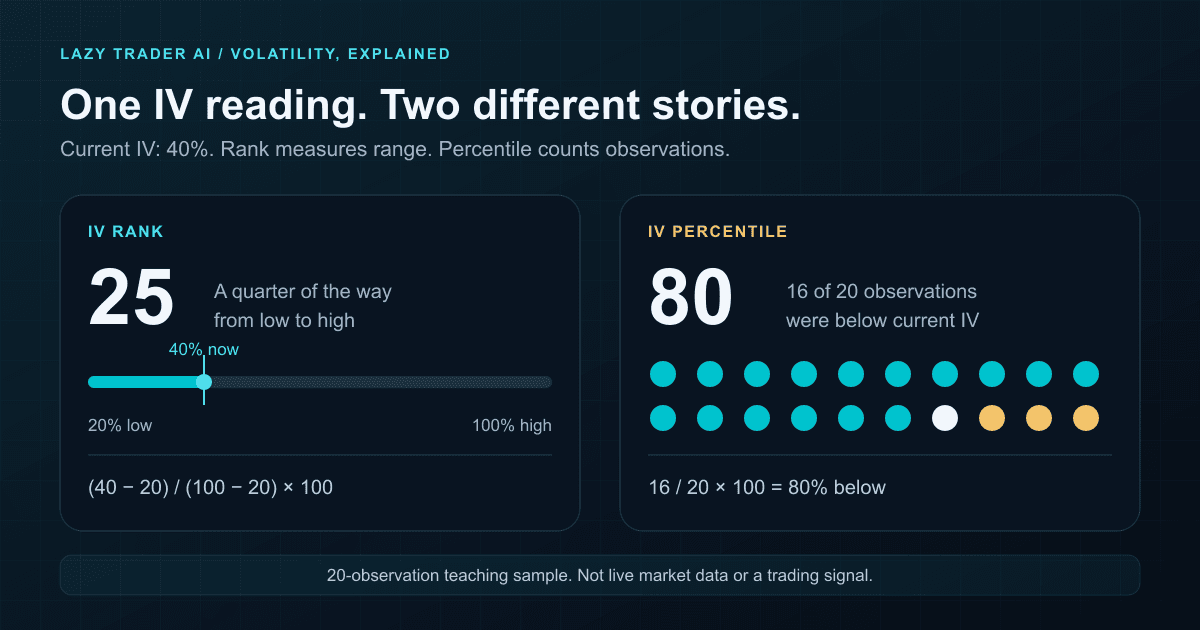
IV Rank vs. IV Percentile: Why the Numbers Disagree
IV rank can look low while IV percentile looks high. Learn the formulas, see an outlier example, and put options volatility in context before earnings.
Lazy Trader AI Research · Oct 25, 2026 · 7 min readHow to Read Unusual Options Flow
Learn how to inspect option premium, fill side, volume versus open interest, and related legs before interpreting an unusual options trade.
Mira Chen · Apr 22, 2026 · 6 min read